
Introduction: The Importance of Choosing the Right Zipper
Choosing the right zipper is more than just a functional decision—it directly impacts the overall quality, durability, and aesthetic of your product. Whether you’re designing a high-end jacket, a durable backpack, or a lightweight garment, the zipper you select will affect both its performance and appearance.
Zippers are a crucial component in fashion, textile, and outdoor industries, but many overlook the significance of choosing the right type. With numerous options available—such as nylon zippers, metal zippers, and plastic zippers—understanding their materials, durability, and best use cases is essential for making the right decision for your product.
In this guide, we’ll explore the differences between these three popular zipper types and help you choose the one that best meets your product’s needs. If you're still unsure about the best zipper for your project, check out our complete guide on how to choose a zipper for detailed tips on choosing the perfect zipper for any product.
Nylon Zippers: Flexibility, Durability, and Customization for Lightweight Products
Material and Properties
Nylon zippers, also called Coil zippers, are made from a synthetic polymer that is well-known for its flexibility, strength, and smooth operation. The teeth of nylon zippers are typically molded from plastic, offering a smooth and flexible feel. Thanks to their robust construction, nylon zippers are highly durable, resistant to abrasion, and perform reliably even after prolonged use.
Best Use Cases
Nylon zippers are ideal for products that require a lightweight, flexible, and durable fastening solution. They are commonly used in jackets, activewear, outdoor clothing, and accessories like backpacks. Their ability to seamlessly integrate with various fabric types and their wide range of color options make them a top choice for designers looking to offer customized solutions.
Advantages
- Lightweight and flexible: Ideal for products that require a flexible fastening solution without adding bulk.
- Smooth operation: Ensures ease of use, even after repeated use.
- Durable and abrasion-resistant: Can withstand everyday wear and tear, making them perfect for active and outdoor products.
- Variety of colors for customization: Nylon zippers come in a wide range of colors, allowing designers to match the zipper to the product design seamlessly.
Disadvantages
- Less durable for heavy-duty use: While durable, nylon zippers may not be as strong as metal zippers for heavy-duty applications.
- Less premium appearance compared to metal zippers: Although they are functional, nylon zippers may not have the same premium look as metal zippers.
Metal Zippers: Strength, Durability, and Premium Appeal
Material and Properties
Metal zippers are crafted using metal teeth, typically made from zinc, brass, or aluminum. These materials provide the zippers with a premium appearance and superior strength. While metal zippers are generally heavier than nylon or plastic zippers, they offer unparalleled durability and reliability. This makes them ideal for high-end fashion, heavy-duty applications, and products requiring a combination of performance and luxury.
Best Use Cases
Metal zippers are commonly used in luxury fashion products like leather jackets, designer handbags, and high-end jeans. Their robust and heavy-duty construction makes them perfect for products that experience high wear and tear, such as outdoor gear and industrial applications. In addition, the shiny and sophisticated appearance of metal zippers elevates the overall aesthetic of any product, adding a touch of luxury to even the most functional designs.
Advantages
- Strong and durable: Metal zippers are known for their superior strength, making them ideal for products that undergo heavy wear, such as jackets, bags, and outdoor gear.
- Premium and stylish appearance: The shiny, high-quality finish of metal zippers adds a touch of luxury and sophistication to any product.
- Suitable for heavy-duty use: Whether in fashion or industrial applications, metal zippers excel in performance and durability under challenging conditions.
Disadvantages
- Heavier than nylon or plastic zippers: Due to the nature of the metal, these zippers are typically heavier, which may not be suitable for lightweight products.
- Can be more expensive: Metal zippers are generally pricier compared to nylon and plastic alternatives, making them a less cost-effective choice for budget-conscious projects.
- May cause damage to delicate fabrics: The rigidity of metal zippers can sometimes cause damage to softer or delicate fabrics.
Plastic Zippers: Lightweight, Cost-Effective, and Versatile Solutions
Material and Properties
Plastic zippers are made from molded plastic teeth, making them lightweight, cost-effective, and highly versatile. Unlike metal zippers, plastic zippers are available in a wide range of colors and finishes, providing greater design flexibility. They are an excellent choice for products that require a lighter, more affordable fastening solution. While they may not be as durable as metal zippers, plastic zippers are an ideal option for lightweight products and mass production.
Best Use Cases
Plastic zippers are widely used in products that require an affordable, flexible fastening solution. They are commonly found in children's clothing, casual wear, tents, and outdoor gear. Their low cost and adaptability make them a top choice for mass-produced products and industries seeking functional yet affordable solutions. Additionally, their lightweight nature makes them suitable for items where weight is a consideration, such as in sportswear and lightweight outerwear.
Advantages
- Lightweight and inexpensive: Plastic zippers are perfect for applications where keeping the product lightweight and cost-effective is essential, such as in children's clothing and mass-produced items.
- Customizable colors and designs: Available in a variety of colors and finishes, making them ideal for products requiring design flexibility and aesthetic appeal.
- Suitable for a wide range of applications: From outdoor gear to sportswear, plastic zippers are adaptable to many industries, especially where lightweight and affordable solutions are needed.
Disadvantages
- Less durable than metal zippers: Plastic zippers are not as strong as metal zippers and may not be suitable for heavy-duty applications.
- Not as premium in appearance: Although functional, plastic zippers may lack the luxury or premium look that metal zippers offer.
- Can wear out over time: While durable, plastic zippers may wear down faster than their metal counterparts, especially in products subjected to heavy use.
Comparing Nylon, Metal, and Plastic Zippers: Which One is Right for Your Product?
When choosing between nylon, metal, and plastic zippers, the decision depends on several factors including your product’s design, intended use, and the desired aesthetic. Each zipper type offers unique advantages, making it essential to select the one that aligns with your product's needs. Here’s a detailed comparison to help guide your choice.
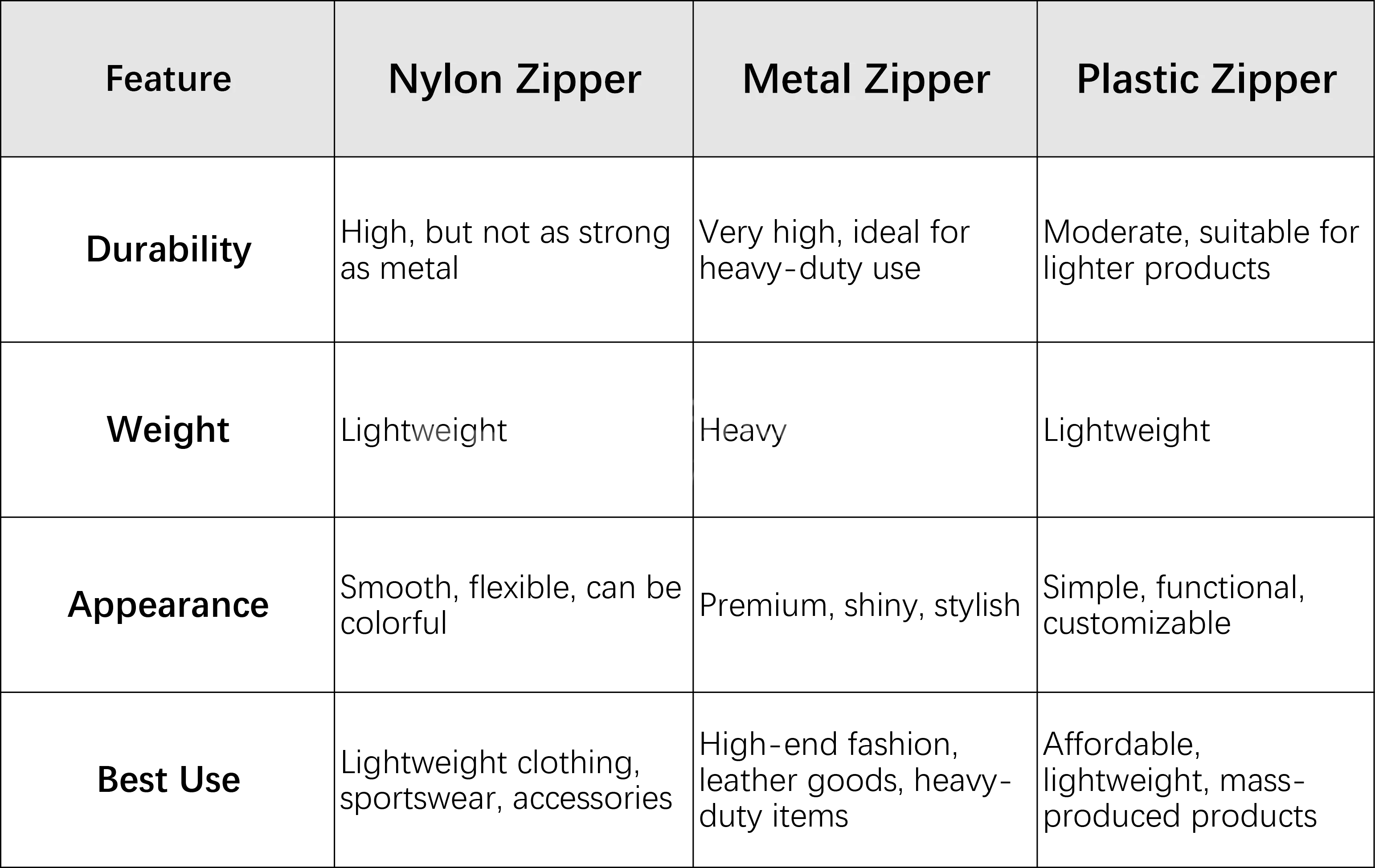
Detailed Breakdown
Let’s break down the features of each zipper type to help you make an informed decision for your specific product. To dive deeper into the various types of zippers, you can check out our simple guide for beginners that explains the differences between each zipper type.
Nylon zippers are known for their flexibility and smooth operation. They are lightweight and resistant to wear, making them ideal for products like sportswear, lightweight jackets, and accessories. While they may not offer the same premium appearance as metal zippers, their durability and versatility make them a popular choice for a wide range of products.
Metal zippers are often chosen for their premium appearance and superior strength. Made from materials like brass, zinc, or aluminum, these zippers are best suited for high-end fashion, leather goods, and heavy-duty applications. While they are heavier and more expensive, their robust performance makes them the ideal choice for products that require extra durability and a luxury look.
Plastic zippers are lightweight, cost-effective, and versatile. They come in a wide range of colors and finishes, making them ideal for mass production of affordable products like children’s clothing, casual wear, and outdoor gear. While they may not be as durable as metal zippers, their affordability and flexibility in design make them an excellent option for budget-conscious manufacturers.
Conclusion:
Selecting the right zipper is essential for ensuring your product’s quality, performance, and longevity. By understanding the properties of nylon, metal, and plastic zippers, you can confidently choose the one that best suits your product's needs. For a comprehensive overview of zippers, including types and uses, please explore our Zippers 101 guide to get all the insights you need.
Frequently Asked Questions (FAQs):
1. Can I use a metal zipper on lightweight fabrics?
While metal zippers are known for their strength and premium appearance, they can damage delicate fabrics due to their heavier weight and sharp edges. It’s recommended to use nylon zippers or plastic zippers for lightweight materials, as they offer better flexibility and won’t cause harm to sensitive fabrics. For garments like shirts, blouses, or lightweight dresses, nylon and plastic zippers are more appropriate.
2.Which zipper is best for outdoor gear?
Nylon zippers are the best choice for outdoor gear due to their durability, abrasion resistance, and flexibility. These zippers can withstand exposure to various weather conditions, making them ideal for products like backpacks, tents, and outdoor jackets. Their ability to maintain smooth functionality even under stress makes them the preferred option for outdoor equipment.
3.Do metal zippers rust?
Metal zippers, particularly those made from steel or zinc, are prone to rusting if exposed to moisture over extended periods. To prevent rust, choose rust-resistant metals like brass or aluminum, which offer better resistance to corrosion and are ideal for wet environments. It’s important to keep zippers dry and well-maintained to prolong their lifespan.
4.How do I choose the right zipper for fashion products?
When choosing the right zipper for fashion items, consider both aesthetic appeal and functionality. For high-end fashion products such as leather jackets, designer handbags, or luxury dresses, metal zippers are a popular choice due to their stylish and shiny appearance. For casual or everyday fashion, nylon zippers or plastic zippers are great options, offering flexibility, durability, and a wide range of colors to match different fabrics and styles.
Need Help Choosing the Right Zipper? Contact Us Today!
Our experts are ready to help you select the perfect zipper for your product. Whether you need assistance with design, customization, or selecting the right material, we are here to provide the support you need.
Contact Information:
Our company, SHANGHAI HIGER GARMENT ACCESSORIES CO.LTD, specializes in zipper production, welcome professionals and companies with accessory needs from all over the world to communicate and negotiate with us. For detailed product information, please visit our official website at http://higer-zipper.com , we look forward to your business to provide high-quality, high standards and professional services.
For any questions or further information, please contact us via:
Whatsapp:+86 135 2414 2125
Email: cs-1@allin-higer.com
Website: https://higer-zipper.com
Choose smart. Choose HIGER.