
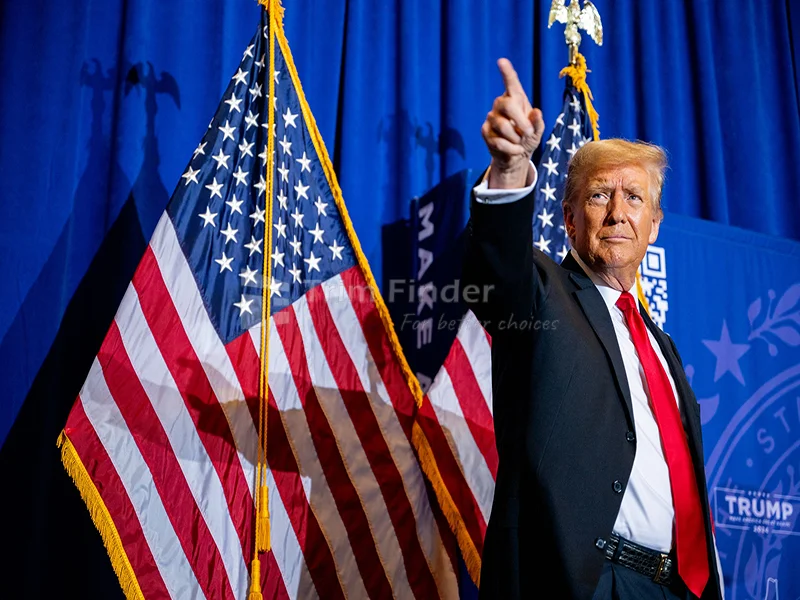
In 2024, after being elected President of the United States, Donald Trump stated that he would impose an additional 10% tariff on goods from China once he took office. Prior to this, Trump had pledged a 60% tariff on Chinese goods. What impact will these high tariffs have on China's economy? How should China's export businesses respond? This article will analyze the effects of Trump's new tariff policy and provide strategies for companies to cope with the changes.
Impact of the Policy on the Export Industry
1. Direct Impact
Increased Export Costs
With the increase in tariffs, the cost of Chinese exported products will inevitably rise. For example, in the garment accessories industry, the unit cost of products like metal zippers and buttons may increase by 10% to 15% due to the tariffs. This means that companies will need to raise their prices to offset the additional cost, which could reduce price competitiveness, especially in the highly price-sensitive U.S. market.
Decreased Orders
U.S. importers may turn to other low-tariff countries, such as Vietnam, Bangladesh, or India, due to the higher tariffs. Data shows that some U.S. importers have already started shifting their sourcing focus from China to Southeast Asia. This shift poses a significant challenge to Chinese export-oriented businesses that rely heavily on the U.S. market.
2. Indirect Impact
Supply Chain Adjustments
To cope with the new tariffs, more Chinese export companies are reevaluating their supply chain management. Some may consider relocating part of their production to free trade zones or other low-tariff countries to avoid high tariffs. For instance, moving production lines to Southeast Asian countries to reduce tariff costs while continuing to supply the U.S. market.
Declining Market Confidence
Long-term trade friction between China and the U.S. may affect European and American customers' trust in China's supply chain, especially in the U.S. market.Although Chinese businesses have an advantage in cost control, the uncertainty of tariff policies could lead European and American clients to reduce their dependence on Chinese suppliers, which could impact brand image and market share.
Response Strategies
1. Optimizing Cost Structure
Improving Production Efficiency
By introducing automated equipment and digital management systems, production efficiency can be enhanced, which helps lower manufacturing costs.Automation not only reduces labor costs but also increases production stability and precision, minimizing waste and enhancing product competitiveness.
Bulk Procurement and Economies of Scale
By collaborating with upstream and downstream suppliers for bulk purchasing of raw materials, companies can reduce unit costs.Centralized procurement increases bargaining power, allowing businesses to obtain better prices while maintaining high product quality.
2.Market Diversification
Expanding into Emerging Markets
As global economic diversification continues, demand in emerging markets such as Southeast Asia, the Middle East, and Africa is growing year by year. Data shows that the demand for apparel imports in Southeast Asia has grown by approximately 8% annually over the past five years. Chinese companies can explore these emerging markets by participating in international exhibitions and partnering with local agents, reducing their reliance on the U.S. market.
Strengthening the European Market
The European market has a high demand for high-quality garment accessories. By improving product quality and complying with European environmental standards and certifications (such as OEKO-TEX, REACH), Chinese companies can increase their competitiveness in the European market. For example, HIGER can enhance its understanding of European market needs and launch high-quality products that meet European standards to improve brand recognition and reputation in this market.
3.Adjusting the Supply Chain
Overseas Production Bases
Consider establishing production bases in low-tariff countries, especially in Southeast Asia, such as Vietnam and Cambodia.By relocating some production to these regions, companies can significantly reduce tariff costs on exports to the U.S.For example, a large garment accessories company successfully reduced its tariff costs by moving part of its production to Vietnam in 2020, resulting in increased orders.
Localized Production
By collaborating with local businesses in the U.S. or setting up assembly plants in the U.S., Chinese export companies can avoid tariffs, improve market response times, reduce transportation costs, and enhance customer service levels. This localized production model helps build stronger customer loyalty and improve market competitiveness.
4.Product Upgrading and Differentiation
Developing High-Value-Added Products
The garment accessories industry can enhance market competitiveness by developing high-value-added products with special functions, such as waterproof zippers and high-strength metal buttons. These products not only meet customer demands but also improve profit margins.Data shows that the profit margins for high-value-added products are typically 2-3 times higher than for standard products, effectively offsetting the cost pressures from tariffs.
Brand Building
As global market competition intensifies, brand development has become increasingly important. By enhancing brand awareness, companies can offset some of the price pressures through product quality and brand advantages. Digital marketing (such as social media promotion, e-commerce platforms, etc.) will help companies increase their global market exposure and strengthen their brand influence.
5.Active Participation in Industry Associations and Government Communication
Seeking Policy Support
Through industry associations and other platforms, companies can apply for export tax rebates, loan benefits, and other policy support to alleviate the cost pressures caused by tariffs. At the same time, companies can stay informed about the latest policy changes through industry associations and adjust strategies accordingly.
Monitoring Policy Trends
As China-U.S. trade negotiations progress, businesses should closely monitor policy changes and adjust their export strategies accordingly. For instance, if tariffs are adjusted, companies should promptly assess the impact of the new policies and respond swiftly.
Conclusion
1. Challenges and Opportunities
Trump’s new tariff policy undoubtedly brings challenges to Chinese export companies, but it also offers opportunities for transformation and innovation. By diversifying markets, optimizing supply chains, and upgrading products, businesses can find new growth points in adversity.
2. Future Outlook
The China-U.S. trade relationship remains uncertain, and companies must maintain flexibility and innovation to adapt to global market changes. Only by continuously innovating and improving competitiveness can businesses survive and thrive in a complex international trade environment.
Contact Information:
Our company, SHANGHAI HIGER GARMENT ACCESSORIES CO.LTD, specializes in zipper and accessory production, welcome professionals and companies with accessory needs from all over the world to communicate and negotiate with us. For detailed product information, please visit our official website at https://higer-zipper.com , we look forward to your business to provide high-quality, high standards and professional services.
For any questions or further information, please contact us via:
Phone:+86 135 2414 2125
Email: cs-1@allin-higer.com
Website: https://higer-zipper.com