
By HIGER — Professional Button & Garment Accessories Supplier
1. Why Buttons Matter More Than You Think
Choosing the right button fastener—whether a Metal Button, Snap Fastener, Snap Button, Plastic Snap Button, Magnetic Snap Button, or Custom Button—is not just a functional choice. It affects:
- User experience
- Durability
- Brand impression
- Safety
- Product lifecycle
From shirts and denim to bags, uniforms, home textiles, outerwear, and babywear, buttons and snaps often outperform zippers or Velcro when flexibility, cost, or styling is important.
Today's brands rely heavily on a wide range of closures: Metal Snap Buttons, Resin Sewing Buttons, Leather Sewing Buttons, Decorative Buttons, Horn Toggle Buttons, Horn Sewing Buttons, Ring Metal Buttons, Spring Metal Buttons, and more.
This guide helps you select the right button based on material, performance, compliance, design, branding, fabric compatibility, and cost efficiency.
2.Types of Buttons and Snaps
Below is a simplified overview of the most common button fastener categories, including both traditional buttons and modern snap fastener systems.
- Snap Button Fasteners (Press Studs)
Includes Metal Snap Button, Plastic Snap Button, Snap Fastener.Applied by press machines for jackets, bags, outdoor gear.
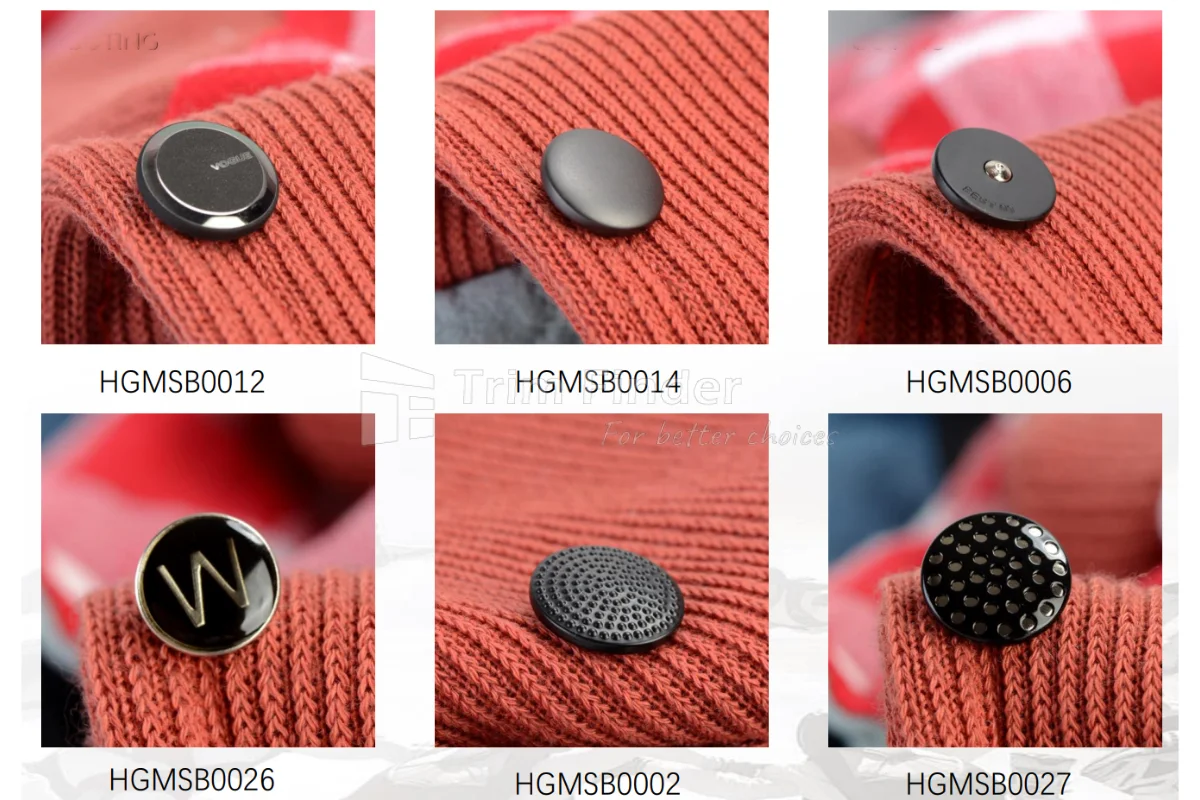
- Stud Buttons / Jeans Buttons
Also called Jeans Button or tack button.Metal, extremely durable—used for denim, workwear, jackets.
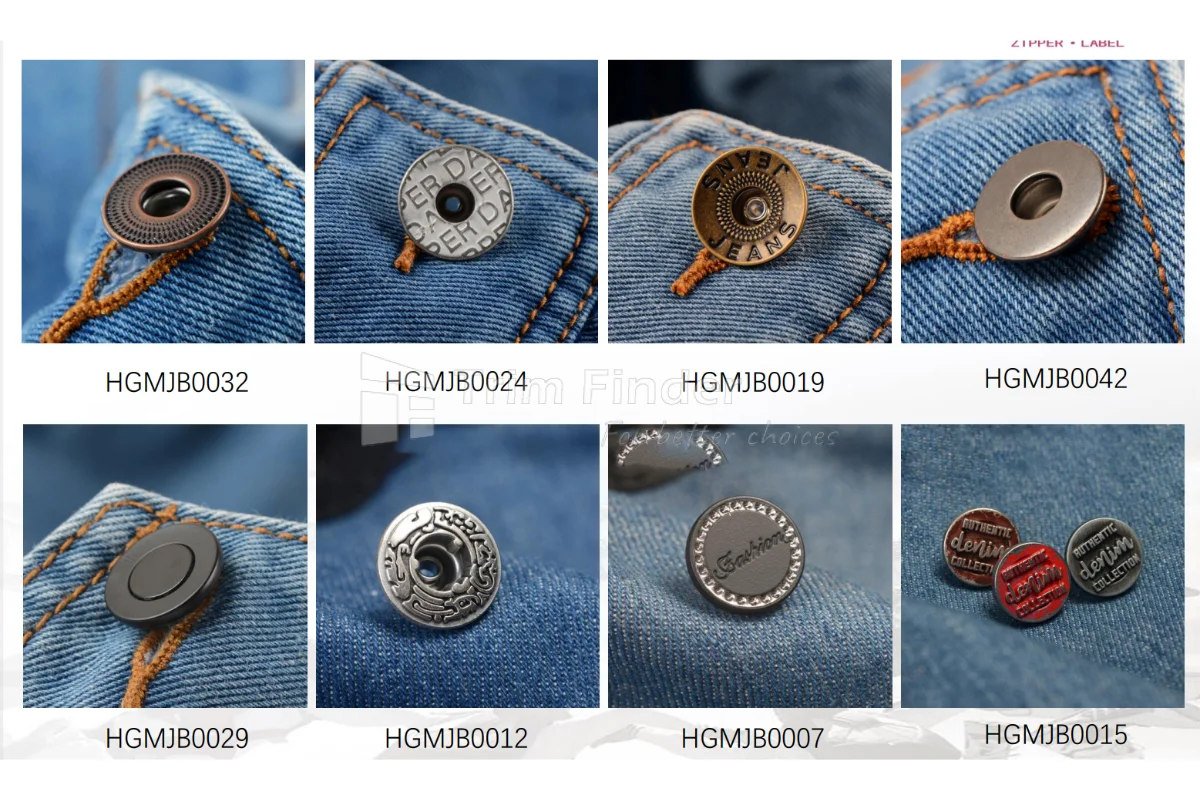
- Magnetic Snap Buttons
Premium look and easy user experience. Common in bags, coats, fashion accessories.
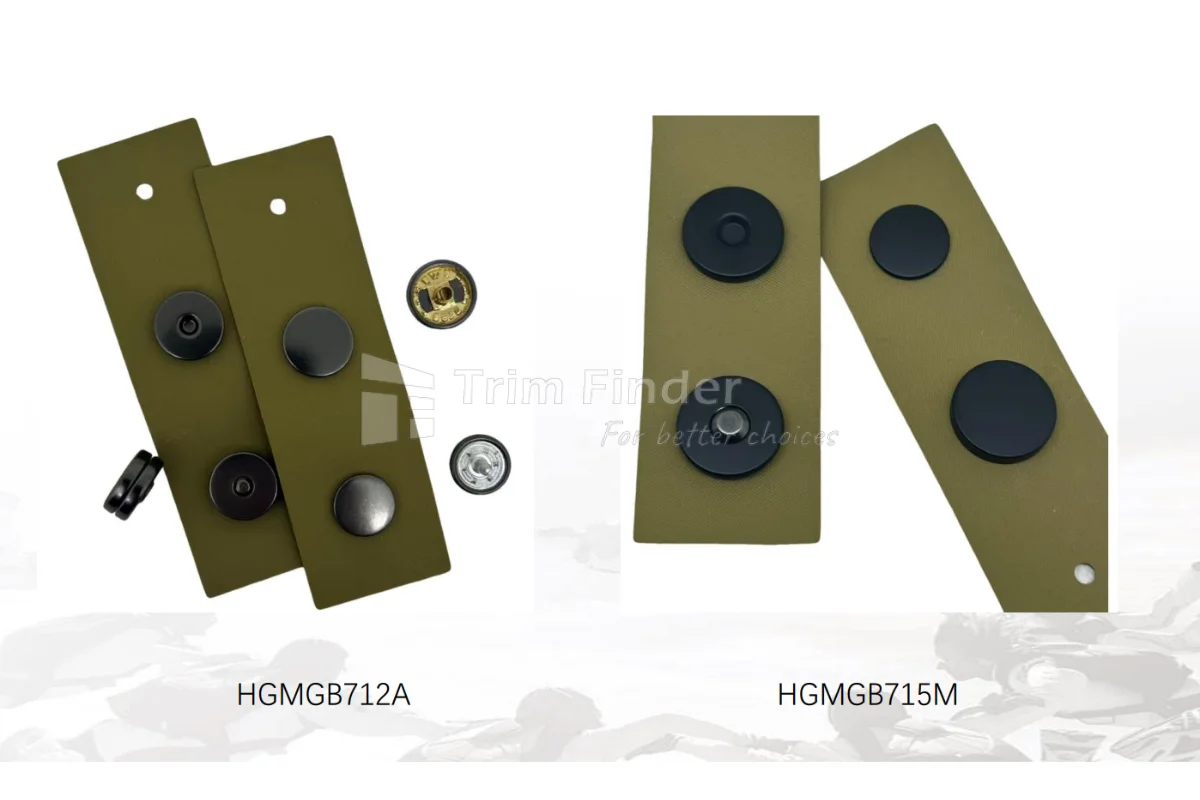
- Shank Buttons
Feature a raised “shank” loop on the back. Ideal for coats, heavy fabrics, and premium fashion.
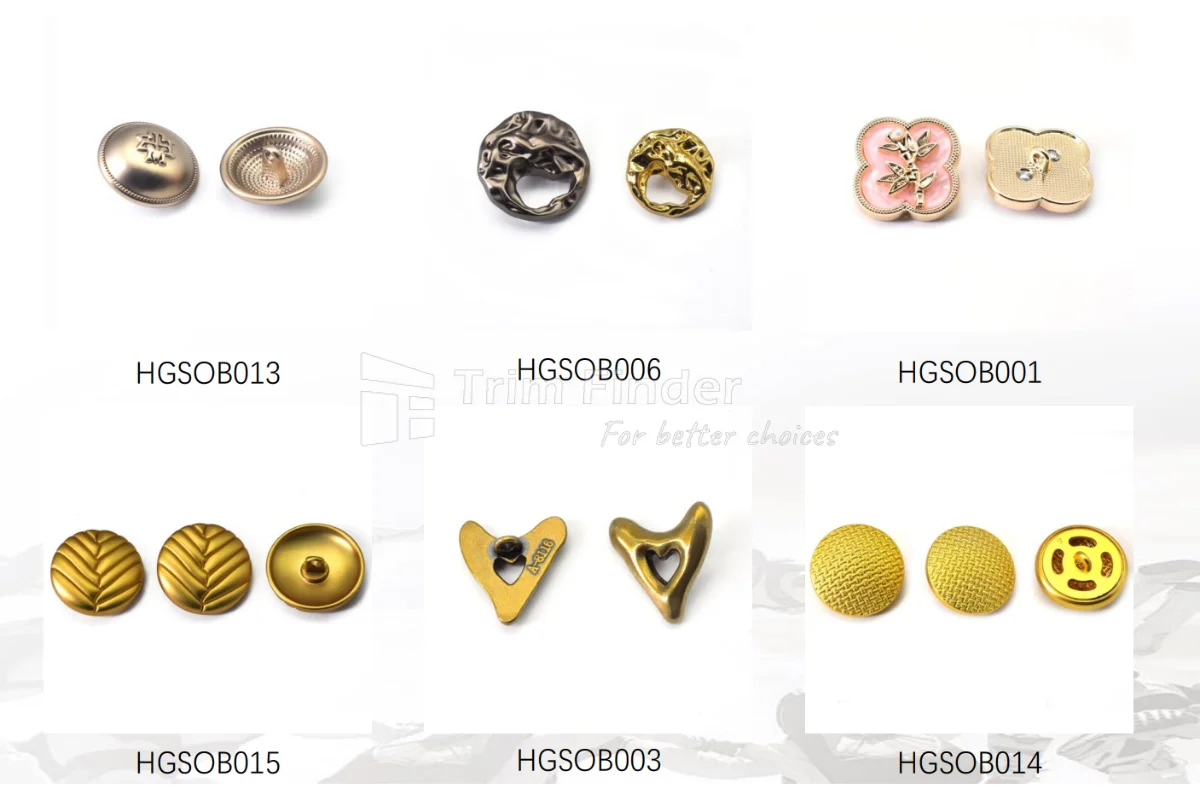
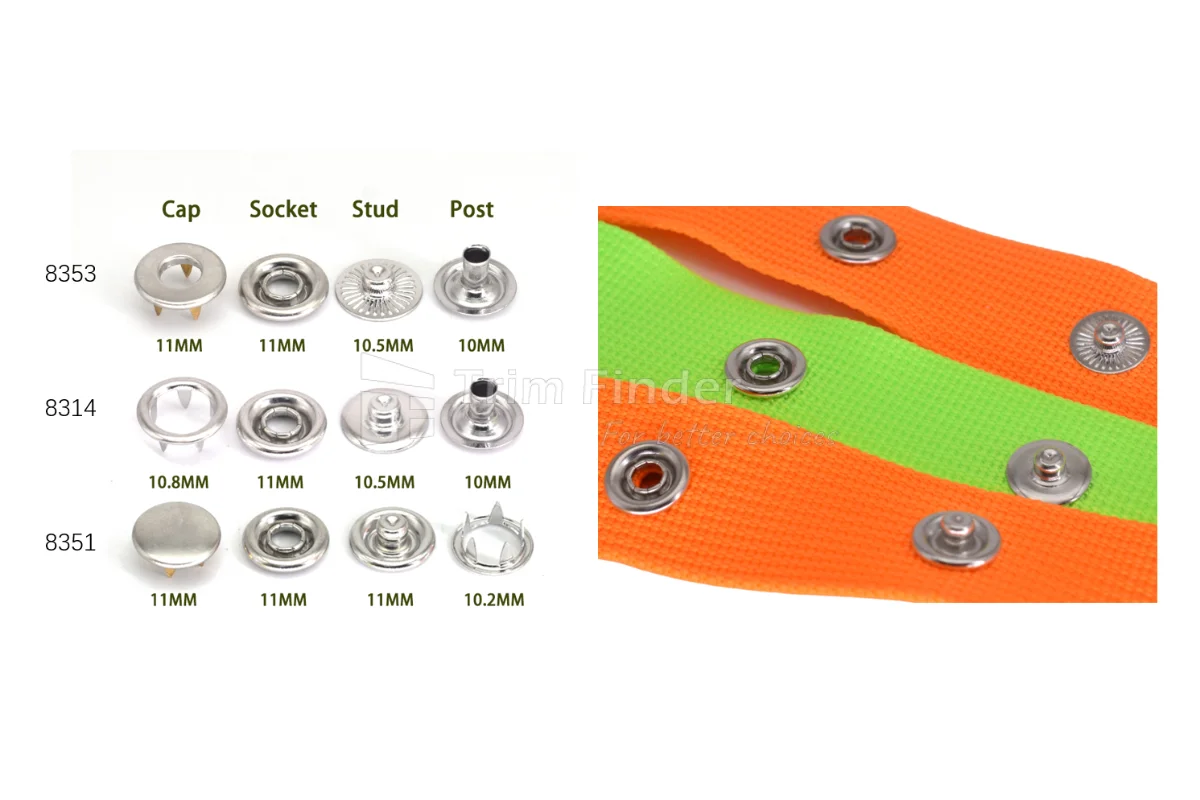
- Ring Metal Buttons / Prong Snaps
Also known as ring snaps or spring snaps.Used for casualwear, babywear, sportswear.
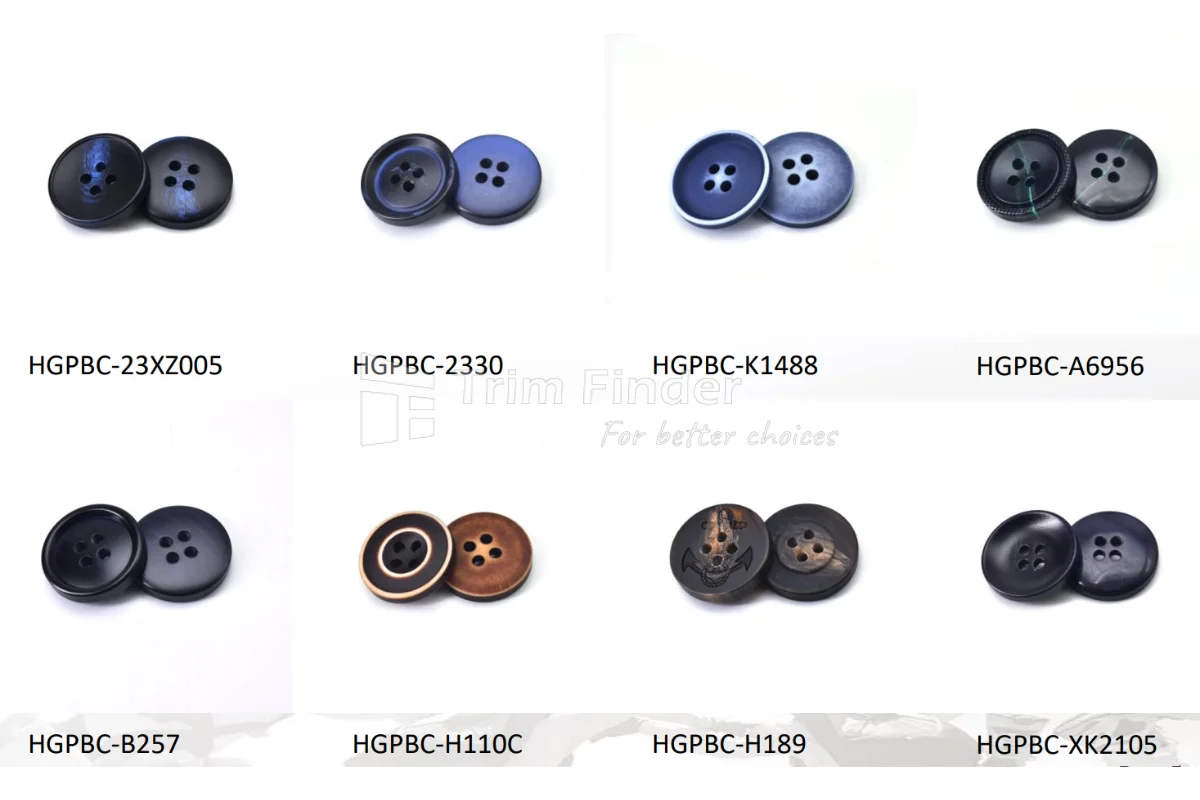
- Sew-Through Buttons/Plastic Buttons/Resin Buttons
Classic Resin Sewing Button, Metal Sewing Button, Plastic Button, or shell button with 2 or 4 holes. Used for shirts, blouses, knitwear, uniforms.
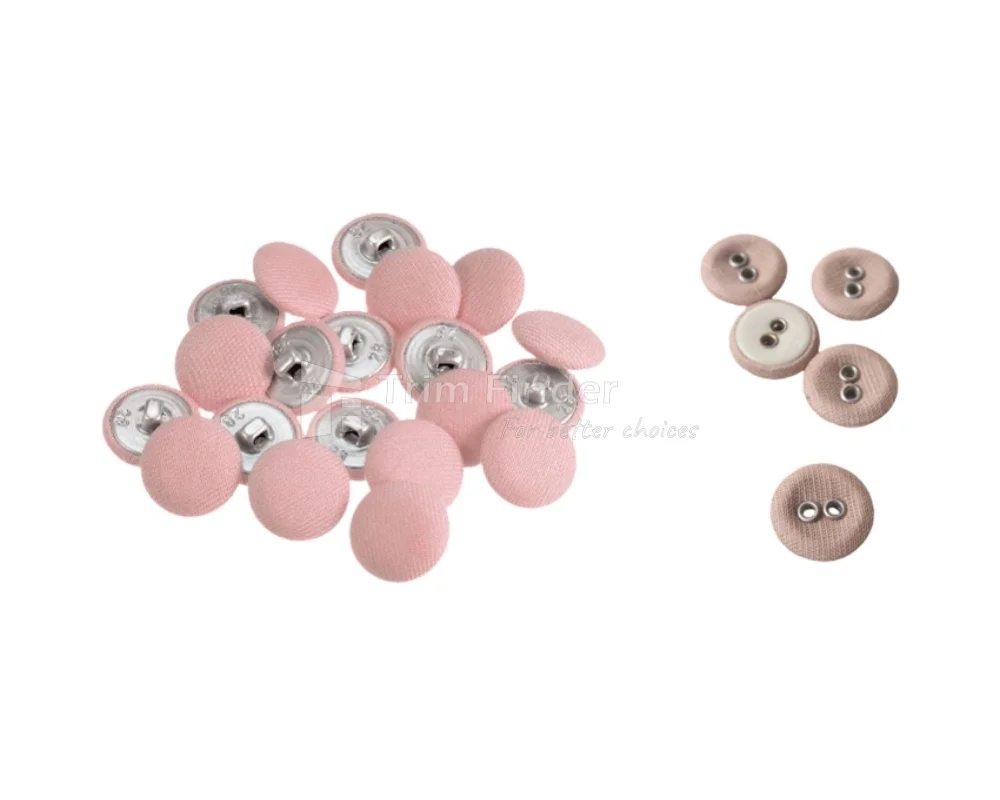
- Fabric-Covered Buttons
Used in formalwear, bridalwear, luxury products.
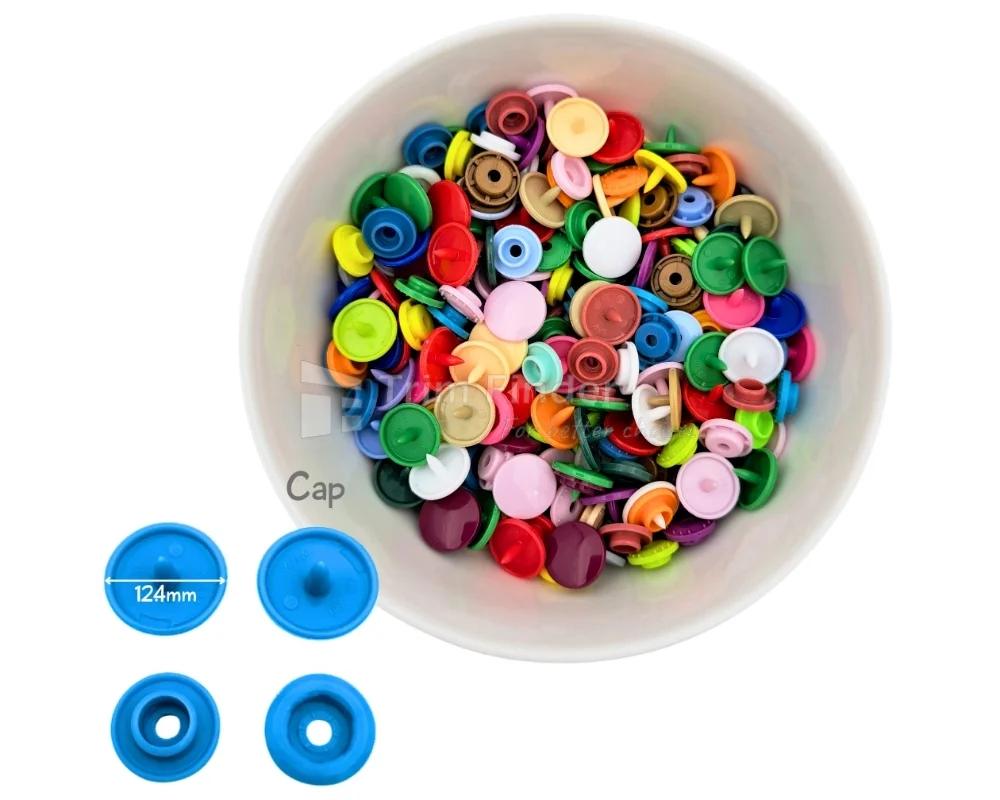
- Plastic Snaps
Lightweight, colorful, widely used in babywear and home textiles.
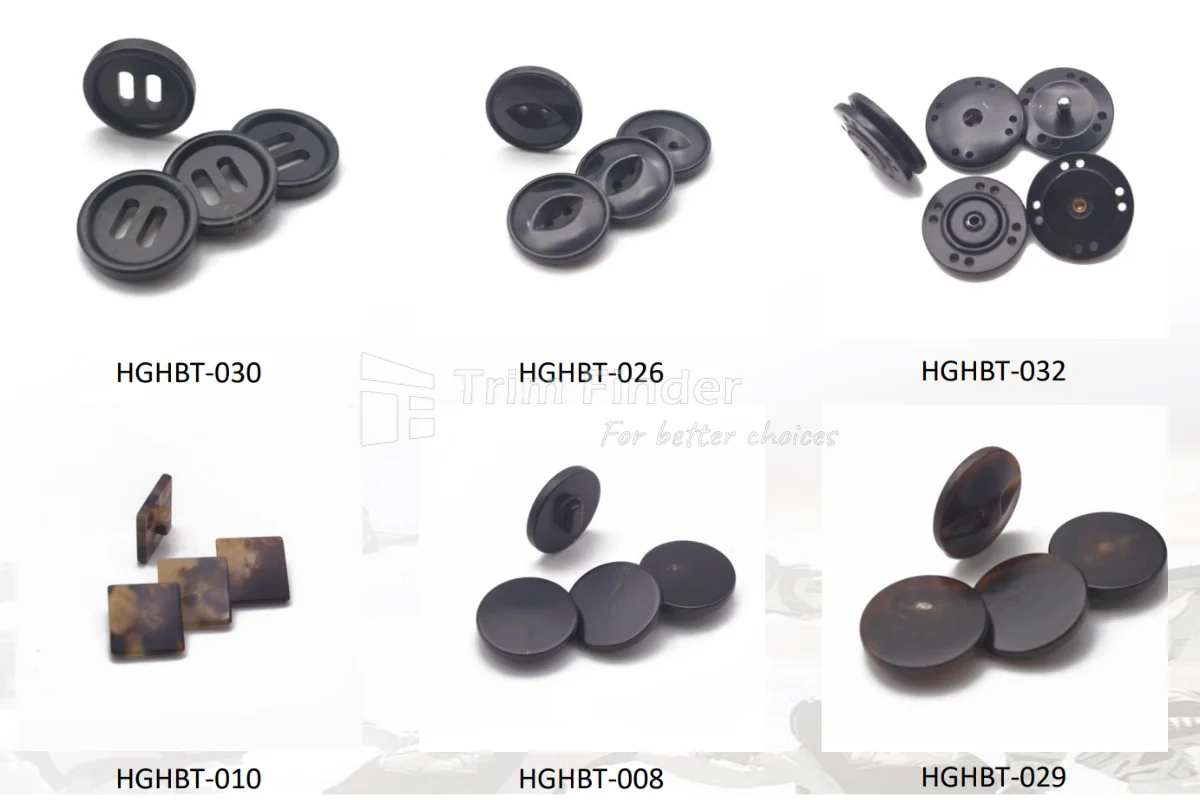
- Horn Sewing Button / Natural Horn Buttons
Organic, high-luxury feel, used in premium shirts and outerwear.
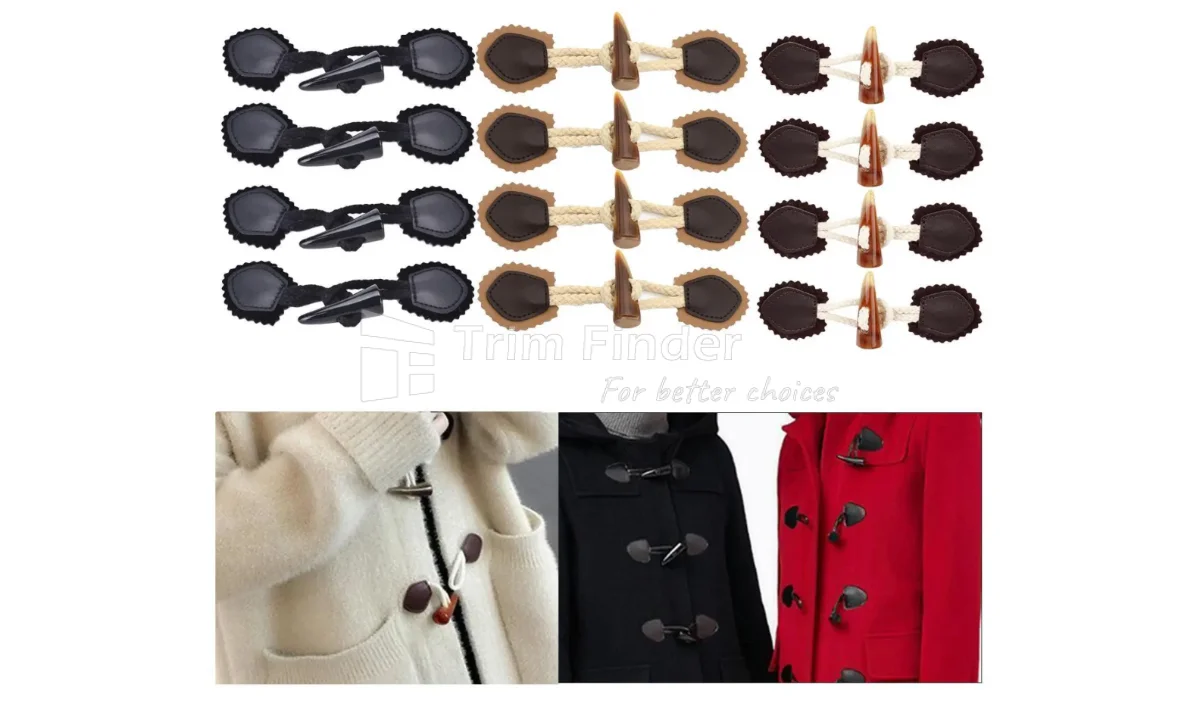
- Toggle Buttons / Horn Toggle Buttons
Elongated, often wooden or horn-made. Used in duffle coats, knitwear, rustic styles.
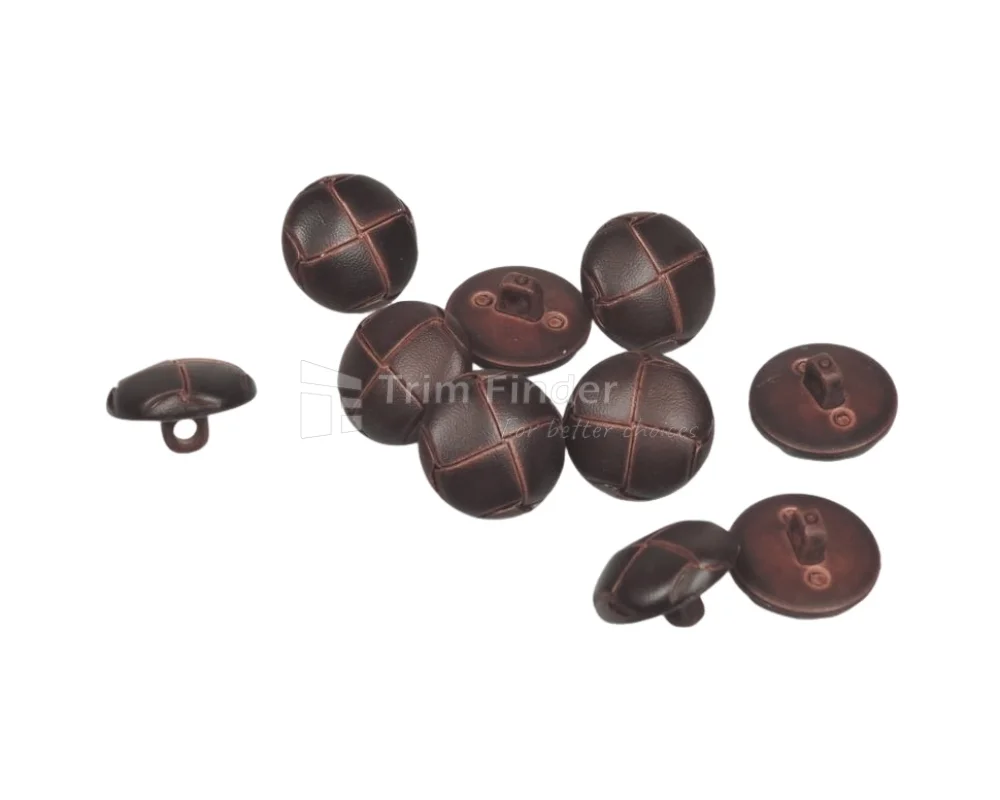
- Leather Sewing Button
Adds durability and premium texture to coats and casual wear.
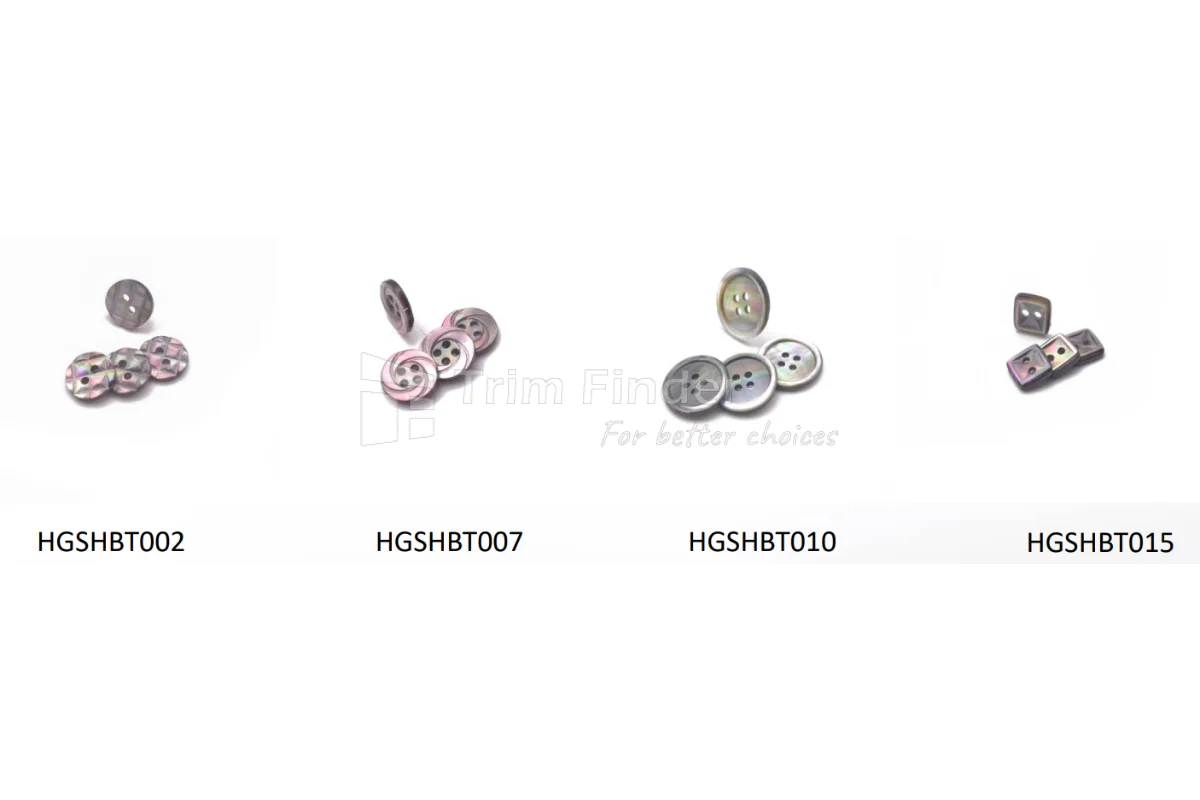
- Pearl/Shell Buttons
Timeless luxury for dress shirts and womenswear.
3. Button Categories Overview
| Category | Description | Typical Use |
| Snap Buttons (Four-Part Snap / Press Stud) | Mechanical closure, metal/plastic combinations | Jackets, sportswear, baby clothes, bags |
| Sewing Buttons (2-hole / 4-hole / Shank) | Classic sewn-in buttons, 2-hole, 4-hole, shank | Shirts, suits, uniforms, knitwear |
| Jeans Buttons (Tack Buttons) | Metal button + rivet | Denim, workwear |
| Magnetic Buttons | Fast magnetic closure | Coats, bags, premium wear |
| Resin Buttons (Polyester Buttons) | Molded resin with Variable color richness | Shirts, womenswear |
| Specialty Buttons (Horn, Shell, Coconut, Recycled) | Natural/eco/brand-focused | Luxury, eco wear |
4. Button Materials & Performance Comparison
4.1 Material Overview
| Material | Strength | Heat Resistance | Corrosion | Sustainability | Typical Use |
| Metal (Brass, Alloy, Steel) | ★★★★★ | ★★★★☆ | Depends on plating | Medium | Jackets, jeans, heavy-duty |
| Polyester / Resin | ★★★★☆ | ★★★☆☆ | Excellent | Medium | Shirts, uniforms |
| Nylon | ★★★☆☆ | ★★★☆☆ | Excellent | High | Outdoor, children |
| Zinc Alloy | ★★★★☆ | ★★★★☆ | Good | Medium | Snap buttons |
| Stainless Steel | ★★★★★ | ★★★★★ | Excellent | Medium | High corrosion applications |
| Natural Shell (Mother of Pearl) | ★★★☆☆ | ★★★☆☆ | Good | High | Luxury shirts |
| Coconut / Wood | ★★☆☆☆ | ★★☆☆☆ | High absorption | High | Eco / Sustainable lines |
4.2 Material Performance Data Table
| Property | Metal Buttons | Resin Buttons | Nylon Buttons | Natural Buttons |
| Tensile Strength | 120–180N | 60–90N | 50–80N | 25–50N |
| Wash Durability | 50–100 cycles | 30–60 | 40–80 | 20–40 |
| Heat Tolerance | 180–250°C | 140–170°C | 130–150°C | 100–120°C |
| Dry Cleaning Resistance | Excellent | Good | Medium | Weak |
| Branding Detail Level | High | Medium–High | Medium | Low |
Note: Values represent industry averages.
5. Industry Testing Standards (What Your Button Must Comply With)
5.1 Pull Strength Standards
| Industry | Standard Pull Strength | Standard | Notes |
| Kidswear | > 90N (snap), > 70N (sew button) | CPSIA / EN 71 | Highest requirements |
| Sportswear | 70–90N | Brand standards | For dynamic movement |
| Denim / Workwear | 100–120N | ISO 13934 | Jeans buttons need strongest |
| Luxury Shirts | 60–80N | Brand QC | Resin/shell standard range |
5.2 Environmental Certifications
| Certification | Meaning |
| OEKO-TEX STANDARD 100 Class I | Safe for babies (no harmful chemicals) |
| REACH | Required for EU import |
| CPSIA Lead Test | Required for US kidswear |
| Nickel-Free Test | Required for EU markets (nickel allergy) |
If you sell to:
- Walmart, Target, GAP, PVH, Zara, H&M, Decathlon, Patagonia, Lululemon
you must meet these.
6. How to Choose the Right Button — Step-by-Step Method
Step 1 — Identify the Application Scenario
Ask yourself:
✔ Who will wear this? (Adults? Kids?)
✔ What environment? (Outdoor? Workwear? Casual?)
✔ How often will it be washed?
✔ Expected lifetime of the garment?
Step 2 — Choose Button Category Based on Use
Recommended Selection Guide
| Product Type | Recommended Button | Reason |
| Shirts | Resin / Shell 2-hole or 4-hole | Light, washable, classic |
| Denim | Tack button + rivets | High strength |
| Winter Jackets | Metal snaps, magnetic buttons | Heavy-duty, easy to use |
| Outdoor Gear | Nylon snaps, anticorrosion metal | Resistant to cold, salt, water |
| Children’s Wear | Plastic snaps (CPSIA compliant) | Safe, high pull strength |
| Luxury Fashion | Shell / metal custom logo | Premium branding |
| Bags & Leather | Metal snaps, magnetic buttons | Strength + aesthetics |
Step 3 — Consider Branding Requirements
Button Branding Options
| Feature | 2D | 3D |
| Logo Clarity | High | Very High |
| Tactile Effect | Basic | Strong |
| Material Suitability | Metal, Resin | Metal |
| Cost | Lower | Higher |
Types of logo finishes:
- Laser engraving
- Embossing
- Debossing
- 3D sculpting
- Ink-filled color
- Epoxy dome finishing
- Antique bronze / gunmetal / matte black effects
If your brand clothing focuses on detail — use 3D metal logo buttons.
Step 4 — Environmental Compliance
Choose OEKO-TEX + REACH materials.
Step 5 — Confirm Pull Strength Requirements
Example Pull-Strength Specifications (Brand Standard)
| Brand Type | Minimum Pull Strength |
| Kidswear Brands (Carters, GAP Kids) | > 90N |
| Outdoor Brands (Columbia, Patagonia) | 80–100N |
| Denim Brands (Levi’s, Lee) | 100–120N |
| Fast Fashion | 50–70N |
7. Branding Options: Shape, Size & Logo Position
7.1 Shapes
- Round (most stable)
- Square
- Rectangle
- Irregular custom shape
- Brand-shape buttons (e.g., star, flower, badge)
7.2 Button Size Conversion Chart
| Ligne (L) | Diameter (cm) | Common Application |
| 10L | 0.63 cm | Infant wear, delicate details |
| 12L | 0.76 cm | Children's clothing, thin shirts |
| 14L | 0.89 cm | Standard shirt cuffs |
| 16L | 1.02 cm | Standard shirt front, blouses |
| 18L | 1.14 cm | Casual shirts, women's jackets |
| 20L | 1.27 cm | Standard dress shirts, light jackets |
| 22L | 1.40 cm | Men's shirts, thicker fabrics |
| 24L | 1.52 cm | Jeans, medium coats |
| 26L | 1.65 cm | Denim jackets, light outerwear |
| 28L | 1.78 cm | Winter coats, bags |
| 30L | 1.91 cm | Heavy coats, luggage |
| 32L | 2.03 cm | Decorative buttons, home textiles |
| 34L | 2.16 cm | Furniture upholstery |
| 36L | 2.29 cm | Furniture, industrial uses |
| 40L | 2.54 cm | Heavy-duty, decor |
| 45L | 2.86 cm | Oversized decorative |
| 60L | 3.81 cm | Large statement pieces |
Key Notes
* In the garment industry, button sizes are primarily measured in Ligne (L). 1 L= 0.635 mm.
* For critical projects, always confirm the exact diameter with our staff, as slight variations can exist between manufacturers.
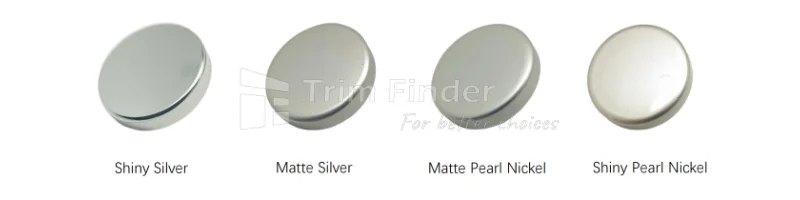
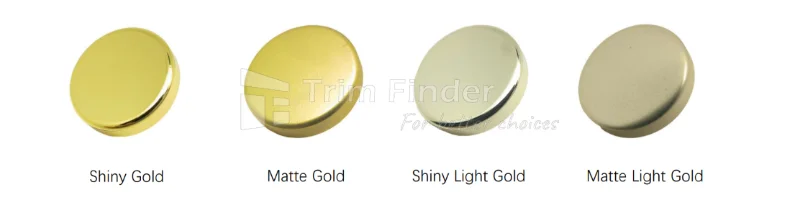
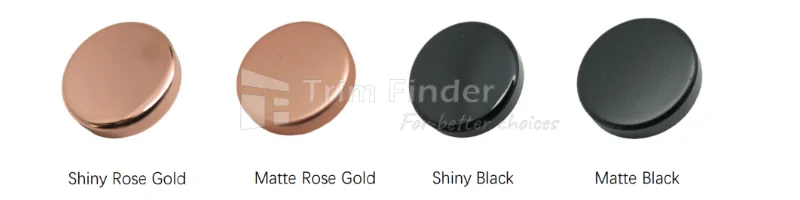
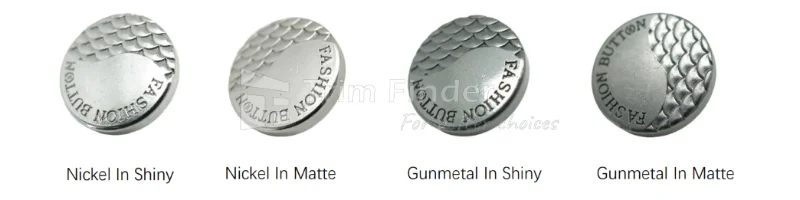
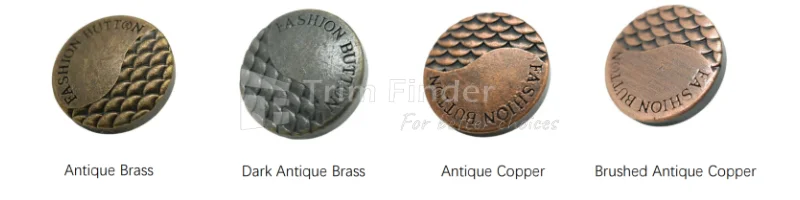
8. Regular Button & Snap Color finishes (Download)
9. Matching Buttons to Fabric and Style
What type of fabric are you using in your product?
- Light fabrics → Plastic Button, small Snap Fastener
- Heavy fabrics → Metal Button, Toggle Button
- Stretch fabrics → Plastic Snap Button
- Luxury fabrics → Horn Sewing Button, Shell, Decorative Button
10. Cost Ranges & Value Engineering Tips
Cost Influenced by:
- Material
- Plating thickness
- Logo complexity
- Order quantity
- Eco certification
- Color and finishing
- Packaging requirements
Cost ranking (low → high):
Resin < Plastic < Basic Metal < Custom Button < Horn < Shell < Magnetic Snap Button < Premium Alloy
11. Care Tips for Installation Considerations &Common Causes of Failure
Caring for buttons and snaps begins with proper installation and continues throughout the life of your product. To help them last:
- Ensure buttons and snaps are securely attached and reinforced at stress points
- Fasten closures before washing to avoid snagging or tearing
- Avoid excessive force when opening snaps to prevent loosening or breakage
- Check regularly for loose threads or weakened fabric around closure areas
For metal snaps and buttons, wipe clean with a damp cloth to prevent rust or buildup. And always match the size and strength of your closures to the weight and use of your design.
- Common Causes of Failure
| Issue | Reason | Solution |
| Button falls off | Wrong stitch method | Reinforce stitching / use shank button |
| Snap breaks | Wrong cap/socket pairing | Use matched components |
| Rusting | Thin plating (<3μm) | Use 5–8μm nickel-free plating |
| Cracking | Low-quality resin | Use premium polyester |
12. Sustainability & Global Environmental Requirements
Global brands are transitioning to sustainable materials:
| Material | Sustainability Level | Notes |
| Recycled Polyester Button | ★★★★★ | Made from recycled PET bottles |
| Coconut Button | ★★★★☆ | Natural, biodegradable |
| Wood Button | ★★★★☆ | Eco-friendly, but low durability |
| Shell Button | ★★★☆☆ | Natural but limited supply |
| Metal Button | ★★★☆☆ | Recyclable |
If your brand targets EU markets, choose OEKO-TEX + REACH compliant products.
13. Final Buyer Checklist
✔ Application & environment
✔ Pull strength
✔ Fabric thickness
✔ Logo (2D/3D)
✔ Brand positioning
✔ Plating durability
✔ Sustainability requirements
✔ Cost vs premium level
✔ Installation method
✔ Lead time
14. Conclusion
Choosing the right button—whether a Metal Button, Snap Fastener, Jeans Button, Plastic Snap Button, Ring Metal Button, Spring Metal Button, Magnetic Snap Button, Resin Sewing Button, Decorative Button, Horn Sewing Button, or a full Custom Button—is a crucial design and engineering decision.
HIGER (www.higer-zipper.com) supports global apparel and accessories brands with compliant, tested, high-quality fastening solutions.
If you need technical support, samples, or product development guidance, HIGER is ready to assist.