
1. Introduction to Higg and Its Importance in the Apparel Industry
1.1 What is Higg?
The Higg Index is a suite of sustainability tools developed by the Sustainable Apparel Coalition (SAC) designed to assess and improve the environmental and social impacts of the apparel and footwear industry. It consists of various modules that help manufacturers, brands, and retailers measure their sustainability performance across different stages of the product life cycle. These tools are designed to make sustainability measurable, actionable, and transparent, enabling companies to identify areas for improvement and communicate their efforts to stakeholders.
1.2 Why is Sustainability Important for Apparel Suppliers?
Sustainability in the apparel industry has become a critical concern due to growing consumer awareness, stricter regulations, and increased environmental impact. The global fashion industry is one of the largest polluters in the world, contributing significantly to carbon emissions, water waste, and chemical pollution. As a result, brands and suppliers are under pressure to adopt more sustainable practices, reduce their carbon footprint, and improve working conditions.
The demand for transparency in the supply chain has also grown, with consumers and retailers wanting to ensure that the products they purchase are made with minimal environmental harm and fair labor practices. Tools like the Higg Index help suppliers meet these demands by providing a standardized way to measure and improve their sustainability performance.
1.3 The Role of Sustainability in the Apparel Industry
Part 1: Sustainability in the Apparel Industry
The apparel industry is one of the largest and most resource-intensive industries in the world. With growing consumer demand for eco-friendly and ethically produced goods, the pressure on companies to adopt sustainable practices has never been higher. Sustainability in apparel refers to a broad range of practices, from sourcing raw materials to the production process, distribution, and eventually the disposal of products.
In recent years, consumers have become increasingly aware of the environmental and social impact of their purchases. They now expect brands to be transparent about their sustainability efforts, and many are even willing to pay a premium for clothing made using sustainable methods. As a result, apparel companies must address a number of key areas in their supply chains to improve sustainability
- Raw Material Sourcing: This includes using organic cotton, recycled polyester, and other sustainable fabrics that have a lower environmental impact compared to traditional materials.
- Water Use and Waste Management: The apparel industry is a major consumer of water, particularly in the dyeing process. Companies are working to reduce water consumption and improve wastewater management.
- Energy and Carbon Footprint: Reducing energy use in factories and moving toward renewable energy sources are critical steps in lowering the industry's carbon footprint.
- Social and Labor Conditions: Ensuring fair wages, safe working conditions, and compliance with labor standards is just as important as environmental sustainability.
As apparel companies embrace sustainable practices, they are not only reducing their environmental footprint but also improving their social responsibility. These efforts are becoming increasingly important for maintaining a positive brand image and meeting consumer demand.
Part 2: How Garment Accessories Manufacturers Can Improve Sustainability in the Apparel Industry
While sustainability in the apparel industry often focuses on fabrics and garment production, garment accessories — such as zippers, buttons, labels, ribbons, hangtags, and other trims — play an equally important role in the overall environmental and social impact of fashion products. These components, though small, are found in nearly every garment and can significantly influence the product’s sustainability profile.
- Material Selection Many conventional garment accessories are made from virgin plastics, metals, or synthetic fibers that are not recyclable and often end up in landfills. By using recycled polyester, organic cotton tapes, biodegradable plastics, or low-impact metals, suppliers can greatly reduce the environmental footprint of these items.
- Durability and Quality High-quality accessories extend the life of the garment, reducing the need for repairs or replacements. Durable zippers, corrosion-resistant metal buttons, and colorfast labels help ensure that the product remains functional and attractive for longer, lowering overall resource consumption.
- Design for Recycling and Reuse Designing accessories that can be easily removed and recycled at the garment’s end-of-life stage is an emerging trend in sustainable fashion. Accessories with detachable structures or single-material composition can facilitate garment recycling and circular economy practices.
- Compliance, Certification, and Supply Chain Transparency In recent years, apparel brands in Europe and North America have increasingly required all suppliers — including garment accessories manufacturers — to provide proof of sustainability through recognized tools such as the Higg Index Facility Environmental Module (FEM). Meeting these requirements not only ensures compliance with local environmental regulations, but also supports full supply chain traceability and builds trust with brands and end consumers. For garment accessories suppliers, aligning with these standards is no longer optional; it has become an essential factor for staying competitive in the global market.
By adopting sustainable practices and leveraging the Higg Index, garment accessories manufacturers can actively contribute to the apparel industry’s sustainability goals, while also meeting the strict demands of international clients.
2. Understanding the Higg Index Tools
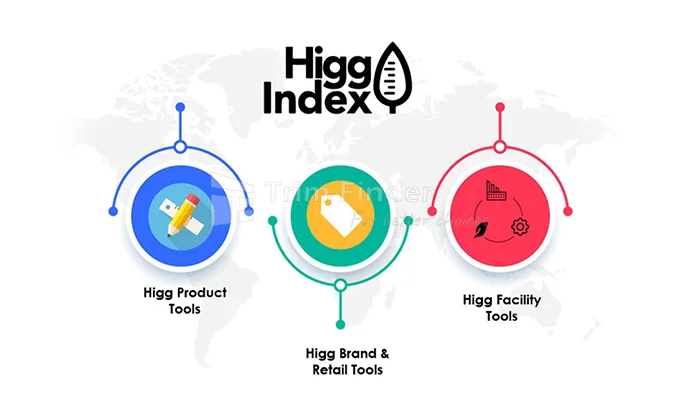
In this section, we’ll introduce the core modules of the Higg Index, focusing on the Higg Facility Environmental Module (FEM), Higg Facility Social & Labor Module (FSLM), and the Higg Brand & Retail Module (BRM).
2.1 Higg Facility Environmental Module (FEM)
The Higg Facility Environmental Module (FEM) is a self-assessment tool for the environmental aspects of manufacturing facilities in apparel and footwear supply chains. It consists of seven assessment items: Environmental Management Systems, Energy Use and Greenhouse Gas Emissions, Water Use, Wastewater, Emissions to Air, Waste Management, and Chemical Management. Only facilities that have received certification by a Cascale-certified third party are allowed to publicly disclose their scores.
2.2 Higg Facility Social & Labor Module (FSLM)
The Higg Facility Social & Labor Module (FSLM) focuses on improving labor practices and ensuring fair working conditions across the supply chain. It evaluates factors such as recruitment practices, working hours, wages and benefits, worker treatment, health and safety, and management systems. By completing the FSLM assessment, companies can ensure they are meeting basic labor standards and improving social responsibility in their operations.
2.3 Higg Brand & Retail Module (BRM)
The Higg Brand & Retail Module (BRM) enables brands and retailers to assess their sustainability performance across various stages of the supply chain, from sourcing materials to product design to end-of-life considerations. It helps businesses track their sustainability goals and communicate their efforts to consumers and stakeholders.
3. How to Get Started with Higg: A Step-by-Step Guide
3.1 Setting Up Your Account and Selecting Modules
Getting started with the Higg Index is easy. To begin, you need to create an account on the Higg platform. After that, you can select the appropriate modules based on your business's needs—whether it's the FEM, FSLM, or BRM. By selecting the right tools, your company will be able to assess its sustainability performance effectively.
3.2 Completing Your Self-Assessment
Once you've selected the modules, you will complete a self-assessment to evaluate your company’s sustainability practices. This assessment involves answering a series of questions about your operations, environmental practices, and social responsibility measures.
3.3 Achieving Certification and Improvement
After completing the self-assessment, your company can work towards achieving certification by a third-party verifier. Over time, you can make improvements based on the feedback provided in the assessment to enhance your sustainability performance.
4. How Higg Index Benefits for Apparel Manufacturers
The apparel industry is increasingly adopting sustainability practices due to growing consumer demand for eco-friendly products. For apparel manufacturers, the Higg Index offers a structured approach to measure and improve their environmental and social sustainability performance. By using the Higg Facility Environmental Module (FEM) and Higg Facility Social & Labor Module (FSLM), manufacturers can identify areas where they can reduce energy consumption, water usage, waste generation, and carbon emissions. Additionally, they can ensure fair labor practices, improve workplace safety, and comply with industry standards, which in turn strengthens their reputation with both consumers and business partners.
One of the main benefits of using the Higg Index for apparel manufacturers is that it provides a clear, data-driven way to measure sustainability progress. Manufacturers can benchmark their practices against industry standards, track improvements over time, and communicate their achievements transparently to customers and stakeholders. This helps build trust with eco-conscious consumers and can even lead to increased sales as sustainable products become more desirable in the market.
5. Conclusion
Sustainability is no longer an option but a necessity in the global apparel industry. For garment accessories suppliers, adopting tools like the Higg Index not only ensures compliance with international brand requirements, but also strengthens market competitiveness and builds trust with eco-conscious consumers.
At HIGER, we are a certified sustainable garment accessories supplier, offering eco-friendly zippers and buttons, recycled labels, and trims that help apparel brands in Europe and North America meet their sustainability and Higg Index compliance goals.
Contact us today to request samples or explore how our sustainable accessories can support your brand’s journey toward a greener future!
Contact Information:
Our company, SHANGHAI HIGER GARMENT ACCESSORIES CO.LTD, specializes in zipper production, welcome professionals and companies with accessory needs from all over the world to communicate and negotiate with us. For detailed product information, please visit our official website at http://higer-zipper.com , we look forward to your business to provide high-quality, high standards and professional services.
For any questions or further information, please contact us via:
Phone:+86 135 2414 2125
Email: cs-1@allin-higer.com
Website: https://higer-zipper.com